Views: 0 Author: Site Editor Publish Time: 2026-02-06 Origin: Site


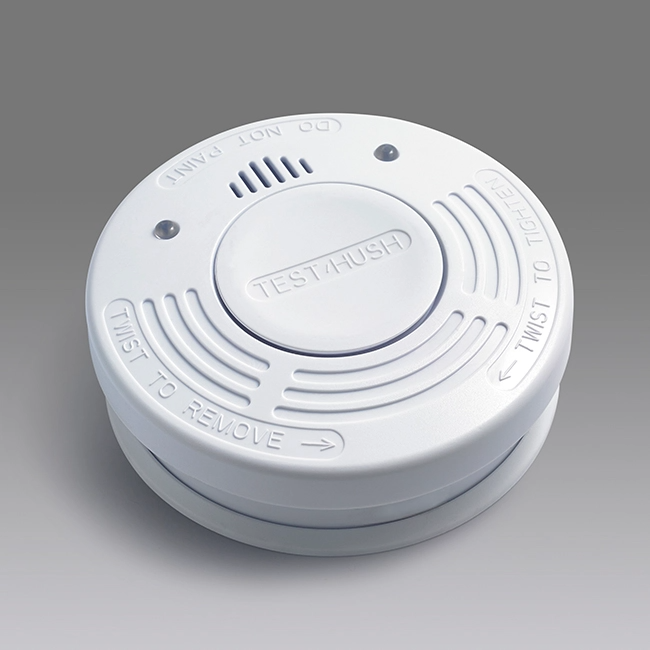
Fire safety in residential and commercial buildings relies heavily on the strategic placement of detection devices. Whether you are installing a smoke detector or a specialized heat alarm, the location determines the response time and, ultimately, the safety of the occupants. Modern fire safety standards emphasize that a smoke alarm detector is only as effective as its positioning relative to airflow, ceiling height, and potential fire sources.
The optimal positioning for a smoke detector is on the center of the ceiling, at least 30cm away from light fixtures or walls, while a heat alarm should be placed in areas where smoke detectors are prone to false triggers, such as kitchens or garages, ensuring they are mounted within the highest point of the room to capture rising thermal energy.
In this guide, we will explore the technical nuances of installing a smoke alarm detector and heat alarm system. From navigating the complexities of sloped ceilings to understanding the specific settings required for interconnected systems, this article provides a professional blueprint for fire safety installation. We will also analyze industry perspectives to ensure your property meets the highest safety benchmarks.
Flat Ceiling Positioning for Maximum Coverage
Sloped and Peaked Ceiling Installation Strategies
Technical Settings and Interconnection Configurations
On a flat ceiling, a smoke detector or heat alarm should be positioned as close to the center of the room as possible, maintaining a minimum distance of 300mm from any wall or light fitting to avoid "dead air" spaces where smoke may not circulate.
When dealing with flat horizontal surfaces, the behavior of smoke is relatively predictable. As a fire develops, hot gases and smoke rise vertically due to buoyancy, hitting the ceiling and spreading outward in a "ceiling jet." To ensure your smoke alarm detector triggers as early as possible, it must be placed within this flow path. Placing a smoke detector too close to a corner creates a significant risk; the junction where the wall meets the ceiling often traps a pocket of stagnant air that prevents smoke from reaching the sensor chamber in the critical early stages of a fire.
Furthermore, the integration of a heat alarm on flat ceilings is standard for kitchens. Unlike a smoke detector, which might be triggered by steam or burnt toast, a heat alarm monitors rapid temperature increases. On a flat kitchen ceiling, the device should be located away from the direct path of the oven or stove to prevent nuisance alarms, yet close enough to detect a legitimate thermal event. Professional installers recommend that the smoke alarm detector units in hallways be aligned to cover the path between bedrooms and exit routes, ensuring that smoke migrating from any room is intercepted.
In larger open-plan areas with flat ceilings, the density of your smoke detector network must increase. National safety standards often suggest that no point on a ceiling should be more than 7.5 meters away from a smoke alarm detector. For a heat alarm, this radius is typically reduced to 5.3 meters. By adhering to these radial measurements, you ensure that the "travel time" for smoke or heat to reach the sensing element is minimized, providing the vital seconds needed for evacuation.
| Feature | Smoke Detector (Flat Ceiling) | Heat Alarm (Flat Ceiling) |
| Minimum Wall Clearance | 300mm | 300mm |
| Detection Radius | 7.5 Meters | 5.3 Meters |
| Ideal Environment | Bedrooms, Hallways, Living Rooms | Kitchens, Garages, Lofts |
| Mounting Orientation | Horizontal / Central | Horizontal / Central |
For sloped, peaked, or cathedral ceilings, a smoke detector must be installed within 900mm of the highest peak, but not directly inside the apex, to ensure the smoke alarm detector can access the rising smoke that tends to bypass the very top of a sharp angle.
The physics of smoke movement changes significantly when a ceiling is not flat. In a room with a sloped ceiling, smoke travels up the incline. However, at the very peak of a gable or sloped roof, there is often a pocket of "cold air" or high-pressure air that can prevent smoke from entering the highest point. Therefore, a smoke detector should be positioned slightly down from the peak. This ensures the smoke alarm detector is positioned exactly where the smoke will naturally gather and circulate after it hits the highest accessible point of the thermal plume.
When installing a heat alarm in a converted attic or a garage with a pitched roof, the same logic applies. The heat alarm needs to be within the upper zone of the room because heat rises. If the device is placed too low on a sloped wall or a low-hanging rafter, the fire may grow significantly before the air temperature at that lower level reaches the alarm's threshold. Maintaining the smoke detector and heat alarm density in these architecturally complex spaces is vital for comprehensive coverage.
Industry regulations specify that if the horizontal rise of the ceiling is less than 1 meter for every 8 meters of length, it can be treated as a flat ceiling. However, for steeper slopes, the vertical placement becomes critical. A smoke alarm detector should be mounted on the slope such that the sensing element is not shielded by structural beams. If the ceiling has deep beams (exceeding 10% of the ceiling height), each "bay" created by the beams might require its own smoke detector or heat alarm to account for the restricted lateral movement of smoke.
The settings of a smoke alarm detector involve configuring the sensitivity levels, choosing between ionization or photoelectric modes, and establishing a hardwired or wireless interconnection to ensure every smoke detector sounds simultaneously.
Modern fire safety systems allow for various settings to minimize false alarms while maximizing detection. For a smoke detector, the most important setting is the interconnection. When one smoke alarm detector in the basement detects a fire, the interconnected smoke detector in the master bedroom must sound. This is often achieved through a physical "interconnect" wire or via 868MHz radio-frequency (RF) wireless signals. Ensuring these settings are correctly synced during installation is a non-negotiable step for multi-story properties.
For a heat alarm, settings are often fixed to trigger at a specific temperature—usually around 58°C (136°F). However, some advanced heat alarm units allow for "Rate-of-Rise" settings, which trigger the alarm if the temperature increases by a certain number of degrees within a short timeframe, regardless of the absolute temperature. This setting is particularly useful in unheated environments like garages, where the ambient temperature might be very low, but a fire would cause a sudden, sharp spike.
Additionally, many smoke detector units now feature a "Hush" or "Silence" button. This setting allows the user to temporarily desensitize the smoke alarm detector for a period of 10 minutes. This is a crucial feature for a smoke detector placed near a bathroom (where steam might be an issue) or a dining area. When configuring the device, installers must ensure the "End of Life" (EOL) signal is active, which alerts the user when the smoke alarm detector or heat alarm has reached its 10-year expiration date and requires replacement.
In conclusion, the effective positioning of a smoke detector and heat alarm is a science that balances fluid dynamics with practical room usage. Whether you are installing a smoke alarm detector on a flat ceiling, a sloped peak, or adjusting the technical interconnection settings, the goal remains the same: early detection saves lives. By avoiding dead air spaces, respecting the 30cm clearance rule, and ensuring that every level of a building is protected by an interconnected smoke detector network, you create a robust safety net.