Views: 0 Author: Site Editor Publish Time: 2025-12-28 Origin: Site


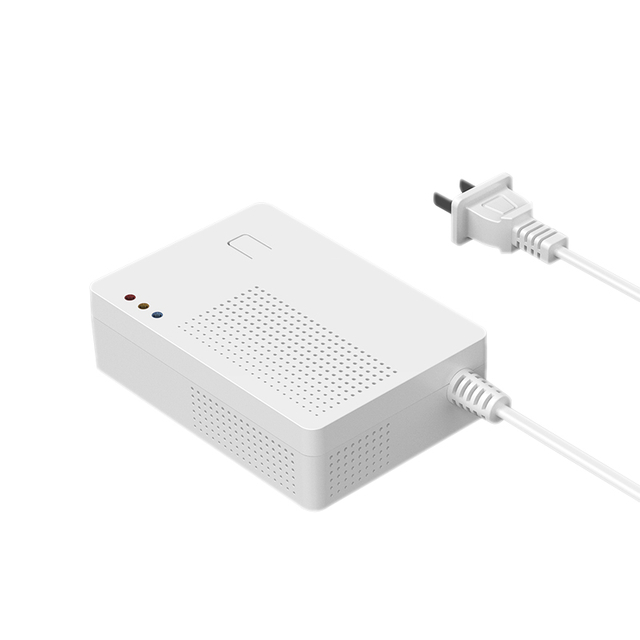
Setting alarm thresholds on a hydrogen gas alarm is not just a “menu setting” task. It is part of a complete safety program that connects detection, response actions, maintenance, and compliance. In this guide, you’ll learn a practical, safety-first method to configure Gas Alarm thresholds and alarm behaviors for a hydrogen gas alarm—without guessing, copying defaults blindly, or creating nuisance alarms that train people to ignore warnings.
Important note: Hydrogen detection is high-risk. Always follow your site’s safety procedures, applicable regulations/standards, and the manufacturer’s instructions. Threshold changes should be approved and verified by qualified personnel.
A safe threshold-setting process begins outside the device. The same hydrogen gas alarm can be used in very different environments (battery rooms, laboratories, storage, fueling, confined spaces), and the right alarm strategy depends on the hazard scenario and your response capability.
Confirm your governing requirements: local regulations, industry standards, insurer requirements, and internal EHS rules often specify minimum actions or alarm staging expectations.
Define the hazard scenario: Where could hydrogen accumulate? How fast could it build up? What ventilation and interlocks exist?
Clarify response actions: Who responds to low alarm vs high alarm? What happens automatically (fans, shutdown relays) vs manually (evacuation, isolation)?
Set change control: document who can change thresholds, why the change is made, and how it’s tested afterward.
Best practice: Treat any Gas Alarm threshold change like a safety-critical configuration change: track the “before/after” settings, date/time, person, reason, and verification results.
Many problems happen when people set thresholds without fully understanding the measurement mode. A hydrogen gas alarm may display one of the following:
%LEL (Lower Explosive Limit): common for flammable gas safety detection. Alarms are staged as a percentage of the flammable limit, helping you respond before dangerous conditions develop.
%Vol hydrogen: used in some fixed systems, specialized sensors, or applications that focus on volume concentration.
ppm hydrogen: common in leak detection or process monitoring where very low concentrations matter, often in controlled environments.
Hydrogen is a highly flammable gas with a tendency to rise and accumulate near ceilings and high points. That physical behavior affects both detector placement and how quickly alarms may transition from low to high in an enclosed space.
Sensor technology matters too. Different sensor types can behave differently under humidity changes, contaminants, airflow, temperature swings, and cross-sensitivities. Your threshold strategy should match the sensor and environment—especially if you’ve experienced false alarms or drift in the past.
A common (and dangerous) mistake is mixing units. For example, a team may copy “10% LEL / 20% LEL” from a portable monitor into a fixed system that is configured in %Vol—without doing the correct conversion and without confirming the reference assumptions used by the instrument.
Safe approach: whenever you see different units across devices or documents, stop and verify:
What unit does the hydrogen gas alarm display?
Is it measuring hydrogen specifically, or a “combustible gas” channel calibrated to a different gas and corrected?
What does the manufacturer state about setpoint units and references?
Conceptual conversion note (for understanding only): %LEL is “how close you are to the flammable limit.” If the system uses %Vol, the relationship depends on the defined LEL reference used by the device/system. Because instruments and standards can differ in how they define or implement references, you should rely on manufacturer guidance and your site’s approved methodology—not informal internet math.
Practical tip: If your safety program includes both portable and fixed hydrogen gas alarm equipment, standardize on an internal reference sheet that lists:
Device model
Measurement unit
Default alarms
Approved site alarms
Required actions at each stage
Instead of asking “What number do most people use?”, use a repeatable selection method that produces defensible alarms for your specific environment.
Start from requirements: review the applicable safety rules and company policy for hydrogen detection.
Check device constraints: confirm the minimum/maximum setpoints supported by your Gas Alarm and whether alarms can be latching, delayed, or configured with hysteresis.
Define alarm stages: at least two stages are common:
Low alarm (warning): early intervention (investigate, increase ventilation, stop non-essential work).
High alarm (urgent): immediate risk control (evacuate/isolations, automatic shutdown, emergency response).
Match thresholds to response time: if the space can accumulate hydrogen quickly or ventilation is limited, choose more conservative staging so the low alarm occurs earlier.
Assign actions and owners: every alarm must have a clear “who does what” plan. If no one knows what to do at low alarm, your low alarm is ineffective.
About default settings: Many devices ship with commonly used default patterns (for example, staged alarms on combustible channels). Defaults can be a starting reference, but they are not automatically “safe” for every site. Treat defaults as “factory baseline,” not “final decision.”
Thresholds are only half the story. Alarm behavior determines whether your hydrogen gas alarm is actionable, trusted, and effective.
Key behaviors to decide:
Latching vs non-latching:
Non-latching alarms clear automatically when gas concentration falls below the reset point—useful for warnings and transient conditions.
Latching alarms require manual acknowledgement/reset—often used for high alarms so events are not ignored or missed.
Alarm delay and filtering: short delays or signal smoothing can reduce nuisance alarms from brief spikes. Use this carefully—over-filtering can hide a real leak.
Hysteresis (reset gap): prevents “chatter” (rapid alarm on/off) when concentration hovers around the threshold.
Outputs and escalation: configure audible/visual alarms and any relay outputs (fans, shutdown valves, interlocks) so they align with the response plan.
| Alarm Stage | Recommended Purpose | Example Actions |
|---|---|---|
| Low (Warning) | Early detection and controlled response | Investigate source, increase ventilation, pause hot work, notify supervisor |
| High (Urgent) | Immediate risk mitigation | Evacuate, isolate process, trigger shutdown interlocks, call emergency response |
Make alarms meaningful. If the low alarm frequently triggers with no actionable cause, people will start ignoring it. If the high alarm is too late or unclear, it fails the purpose of a Gas Alarm: to prompt timely action.
Hydrogen’s tendency to rise means detector location is often the difference between early warning and late detection.
Install at likely accumulation points: ceilings, roof peaks, high corners, and above potential leak sources.
Consider airflow: ventilation can push hydrogen into specific pockets. Avoid “dead zones” behind beams, inside enclosures, or areas with poor circulation.
Protect the sensor: avoid direct water spray, heavy dust, corrosive fumes, or extreme heat that can shorten sensor life or distort readings.
Use multiple detectors when needed: large rooms, complex layouts, or separated bays often require more than one sensor to ensure coverage.
Placement and thresholds work together. A detector placed too low may not see early accumulation, forcing thresholds to be set more conservatively to compensate—often leading to delayed detection anyway. Put the sensor in the right place first, then tune thresholds.
After you set thresholds and alarms, you must verify the system behaves correctly. A hydrogen gas alarm that “looks configured” but doesn’t trigger outputs, doesn’t alarm at the expected points, or is overdue for calibration is a hidden risk.
Verification checklist (recommended):
Configuration review: confirm low/high setpoints, latching settings, delays, hysteresis/reset logic, and output mapping.
Functional alarm test: confirm audible/visual alarms activate as intended and can be acknowledged/reset according to your procedure.
Output test: confirm ventilation fans, relays, interlocks, or shutdown logic trigger correctly (as applicable).
Gas response verification: perform approved testing using the manufacturer’s recommended procedure (often involves certified test gas and controlled exposure).
Documentation: record results, device ID, calibration date, and who performed the work.
Maintenance matters for trust. A well-maintained Gas Alarm program reduces both false alarms and missed alarms. Establish a schedule for calibration and routine checks based on manufacturer guidance, site conditions, and safety criticality.
Mistake: copying defaults without risk assessment.
Fix: align alarms to your hazard scenario, ventilation, room volume, and response plan.
Mistake: mixing units (%LEL vs %Vol vs ppm).
Fix: standardize units per device type and use manufacturer-supported conversions where required.
Mistake: detector installed too low.
Fix: re-evaluate placement at high accumulation points and near likely leak sources.
Mistake: nuisance alarms from transient spikes.
Fix: investigate the root cause (airflow, sensor condition, interference), then apply modest filtering/hysteresis only if your safety team approves.
Mistake: changing thresholds but skipping verification.
Fix: add configuration changes to your management-of-change workflow with mandatory testing and sign-off.
Each organization below is listed separately, without combining or summarizing their viewpoints.
Industrial Scientific: Emphasizes understanding alarm settings (including defaults), aligning setpoints with standards and the intended use case, and treating alarm configuration as part of a broader safety strategy rather than a simple device tweak.
MSA Safety: Highlights that devices may ship with factory alarm thresholds and configuration options (including alarm behavior), and that the final settings should match the safety requirements and approved practices for the work environment.
Sensidyne: Focuses on hydrogen detection as a system problem—sensor selection, placement, and application context—stressing that alarm strategy should support early detection and reliable response in hazardous scenarios.
Exponential Power: Presents staged warning/alarm logic in hydrogen monitoring contexts tied to battery applications, emphasizing practical installation considerations and clear alarm response planning.
DRKsir: Centers on installation strategy, especially mounting location and coverage considerations for hydrogen, reflecting the importance of positioning detectors where hydrogen is most likely to accumulate.
GAO Tek: Takes an operations-and-maintenance viewpoint: alarm thresholds should be set based on the application and safety requirements, then supported by regular calibration, maintenance, and documented verification.
GfG Safety (portable monitor manuals): Provides practical device-level guidance about alarm configuration and usage in the field, reinforcing that correct setup and ongoing maintenance are key to reliable detection performance.
Should I use %LEL or %Vol for a hydrogen gas alarm?
It depends on your application and the sensor/system design. %LEL is common for flammable safety response and staging. %Vol can be used in specific systems or facility monitoring setups. The safest path is to follow your device’s intended measurement mode and your site’s approved methodology.
Are factory default thresholds “good enough”?
Defaults are a starting point, not a guarantee. Your facility layout, ventilation, process conditions, and response plan may require different thresholds or alarm behaviors. Always verify and document.
How do I reduce nuisance alarms safely?
Start by finding the root cause: placement, airflow, sensor condition, environmental interference, or maintenance issues. Only then consider modest use of filtering, hysteresis, or alarm delays—and ensure your changes do not mask real leak events.
Do I need to test after changing thresholds?
Yes. A threshold change should trigger a verification workflow that confirms alarms activate at the intended points and that outputs (fans/interlocks) work as designed. Documentation is part of safe operation.
A safe hydrogen gas alarm setup is a complete program: correct placement, defensible thresholds, clear alarm behaviors, verified outputs, and disciplined maintenance. When you treat Gas Alarm configuration as a safety system—rather than a single number—you reduce nuisance alarms, improve response confidence, and strengthen protection against hydrogen-related hazards.