Views: 0 Author: Site Editor Publish Time: 2026-02-14 Origin: Site


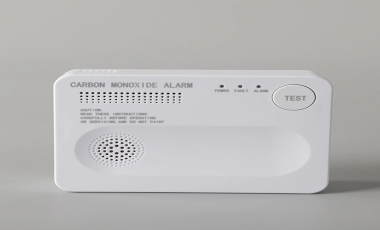
To determine if your Carbon Monoxide Alarm has reached its end of life, you should check for a recurring two-beep chirp every minute, look for an "End" or "ERR" message on the digital display, and verify the manufacture date printed on the back of the unit, as most sensors expire between 7 and 10 years after installation.
Hearing a carbon monoxide alarm beeping can be a cause for immediate concern, but it is essential to distinguish between a life-threatening emergency and a technical end-of-life warning. An expired Carbon Monoxide Alarm creates a false sense of security that is almost as dangerous as having no alarm at all. In high-traffic commercial environments or industrial processing plants, the failure of a carbon monoxide alarm can lead to significant liability issues and occupational hazards. This guide will detail the specific indicators of an expired unit, explore the mechanics of modern wireless systems, and provide a professional framework for maintaining a robust safety network through timely replacements.
Perspectives from Leading Safety Platforms
Time to Replace Your Alarm
How Wireless Smoke Alarms Work
Conclusion
To ensure the highest standards of safety compliance, it is helpful to review the technical perspectives of major industry entities regarding the expiration of a Carbon Monoxide Alarm.
The Kidde platform emphasizes that the "End of Life" feature is a critical safety innovation designed to prevent users from relying on a failed sensor. They note that when a Carbon Monoxide Alarm reaches its age limit, it will emit a specific pattern of carbon monoxide alarm beeping that cannot be silenced by simply changing the battery. According to the Kidde platform, this permanent signal is triggered by an internal timer that counts down from the moment the unit is first powered on. They recommend that users always write the date of installation on the side of the carbon monoxide alarm to avoid guesswork when the alert eventually sounds.
The Fireline Seattle platform focuses on the legislative and practical aspects of Carbon Monoxide Alarm maintenance. They point out that in many jurisdictions, it is a legal requirement for landlords and businesses to replace any carbon monoxide alarm that has exceeded its manufacturer-specified lifespan. According to the Fireline Seattle platform, an expired carbon monoxide alarm beeping is frequently mistaken for a low-battery warning. They stress that if a unit continues to chirp after a battery change, it is almost certainly at the end of its life and must be replaced entirely to ensure the building remains up to fire code.
The most definitive way to know it is time to replace your Carbon Monoxide Alarm is when the device initiates a specific end-of-life sequence, characterized by two chirps every 30 to 60 seconds, which is distinct from the four-beep emergency siren or the one-beep low-battery alert.
Every Carbon Monoxide Alarm is equipped with a sensitive electrochemical sensor that reacts with CO molecules to produce an electrical current. Over time, the electrolyte in this cell dries out or becomes contaminated by household dust, humidity, and chemical vapors. When the sensor's internal resistance reaches a critical point, the Carbon Monoxide Alarm microprocessor triggers the end-of-life alert. In 2026, most digital models will display a clear "END" or "EOL" code on the screen. If you encounter this, the carbon monoxide alarm beeping is a final notification that the device has officially retired and can no longer protect you from gas leaks.
Beyond the audible carbon monoxide alarm beeping, you must perform manual audits of your safety hardware. The manufacture date is usually found on a small white sticker on the back of the Carbon Monoxide Alarm. If the current date is more than 7 to 10 years past that manufacture date (depending on the specific model), the unit is legally and technically expired. In professional B2B settings, such as hotels or apartment complexes, managers should maintain a centralized database of these dates. Relying on the carbon monoxide alarm to tell you it has failed is a reactive strategy; proactive replacement ensures there is never a gap in your facility's protection.
Furthermore, physical degradation can be a sign that a Carbon Monoxide Alarm is nearing its end. If the plastic housing has turned yellow or if the "Test" button feels unresponsive or "sticky," the internal circuitry may be suffering from corrosion. While the carbon monoxide alarm beeping might not have started yet, these physical cues suggest that the reliability of the carbon monoxide alarm is compromised. In the world of industrial safety, a device that "might" work is a liability. Replacing your Carbon Monoxide Alarm at the 7-year mark, even if it hasn't signaled its end of life yet, is the gold standard for risk management.
| Signal Type | Audible Pattern | Visual Display | Required Action |
| Emergency Alarm | 4 Beeps, Pause, 4 Beeps | High PPM Number | Evacuate; call emergency services |
| Low Battery | 1 Chirp every minute | "LB" or Battery Icon | Replace battery in Carbon Monoxide Alarm |
| End of Life | 2 Chirps every minute | "END" or "EOL" | Replace the entire Carbon Monoxide Alarm |
| Malfunction | Constant or 3 Chirps | "ERR" or "FAULT" | Clean or replace the Carbon Monoxide Alarm |
Wireless Smoke Alarms and Carbon Monoxide Alarm systems work by using radio frequency (RF) or Wi-Fi modules to create an interconnected network where a single unit's detection triggers a simultaneous alert across every device in the building.
Interconnectivity is a massive leap forward for the Carbon Monoxide Alarm. In traditional systems, if a carbon monoxide alarm beeping started in a basement utility room, residents in an upstairs bedroom might not hear it until CO levels were already dangerously high. In a wireless setup, the moment a Carbon Monoxide Alarm detects a threat, it sends a digital "broadcast" signal to every other unit. This ensures that the carbon monoxide alarm beeping is heard throughout the entire premises instantly. For B2B stakeholders, this technology is essential for large warehouses or multi-story offices where sound travel is obstructed by heavy machinery or structural walls.
The mechanics of these wireless Carbon Monoxide Alarm units involve low-power mesh networking. Each carbon monoxide alarm acts as both a receiver and a transmitter. This means that if one unit reaches its end of life, the digital display on the interconnected units might even notify the user which specific Carbon Monoxide Alarm is chirping. This is a significant advantage for maintenance teams who need to identify which carbon monoxide alarm beeping event in a large facility is an actual gas leak and which is just a maintenance request.
Moreover, wireless Carbon Monoxide Alarm systems often integrate with smart building hubs. This allows for remote monitoring, where a facility manager can receive a push notification on their smartphone if a Carbon Monoxide Alarm reaches its end of life or if a low-battery carbon monoxide alarm beeping occurs. This digital oversight reduces the labor costs associated with manual inspections. By understanding how these wireless networks function, businesses can choose a Carbon Monoxide Alarm solution that offers not just detection, but comprehensive, automated safety management for the entire 10-year lifespan of the sensors.
Interconnected Alerts: If one carbon monoxide alarm sounds, they all sound.
Remote Diagnostics: Receive "End of Life" or "Fault" notifications on mobile devices.
Easy Installation: No need for expensive hard-wiring through walls and ceilings.
Scalability: Easily add more Carbon Monoxide Alarm units as a facility expands.
Zonal Identification: Quickly identify which area of a large plant has triggered a carbon monoxide alarm beeping event.
Determining the end of life for your Carbon Monoxide Alarm is a fundamental task that should never be overlooked. Whether you are alerted by the distinctive two-pulse carbon monoxide alarm beeping or you identify an expired unit through a routine audit of manufacture dates, the action remains the same: immediate replacement. In 2026, the technology within a carbon monoxide alarm is more reliable than ever, but it is still subject to the laws of chemistry. A sensor that has been active for a decade is a sensor that has reached the end of its reliable service.
As we have seen from industry leaders like Kidde and the insights from fire safety experts at Fireline Seattle, the end-of-life signal is a feature, not a flaw. It is the device's way of ensuring that it never fails you in a moment of crisis. For B2B operators, staying ahead of these expiration dates with interconnected, wireless Carbon Monoxide Alarm systems is the most efficient way to maintain a safe, compliant, and modern environment.
In conclusion, your Carbon Monoxide Alarm is a silent guardian that eventually needs a successor. Don't wait for an emergency to find out your sensors have expired. Listen for the specific carbon monoxide alarm beeping of an end-of-life alert, check your dates regularly, and invest in high-quality replacements to keep the "silent killer" at bay. Safety is a continuous process, and the timely replacement of your carbon monoxide alarm is one of the most important steps in that journey.