Views: 0 Author: Site Editor Publish Time: 2025-12-30 Origin: Site


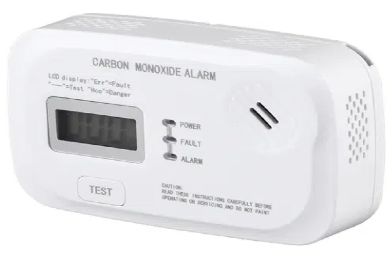
In hazardous workplaces, a Gas Alarm is often treated like a simple “on/off” safety device. In reality, it is a measurement system—one that can drift, degrade, or fail quietly until the day you need it most. A smart calibration schedule does more than meet a checkbox. It keeps your alarm gas sensor accurate, reduces nuisance alarms, and cuts the operational churn that leads to avoidable downtime.
This guide translates proven industry practices into a practical, risk-based calibration schedule you can apply to portable monitors and fixed systems. You’ll also learn how to build a workflow that minimizes retesting and device outages without compromising safety.
Risk increases when an alarm gas sensor reads low (missed exposure) or reads high (false alarms and unnecessary shutdowns). Downtime increases when teams react instead of planning—pulling devices from service unexpectedly, repeating failed tests, or waiting on calibration resources.
A reliable schedule solves both problems by:
Detecting drift early before it becomes a safety event or a production interruption.
Preventing nuisance alarms through consistent performance checks and clear pass/fail criteria.
Reduccing device outage time by aligning service intervals with operations and using a swap-and-go approach.
Creating audit-ready records so you don’t re-test because “the proof is missing.”
Different sites use different labels. To avoid confusion, define these steps in your Gas Alarm program and train everyone to use the same language:
Bump test (functional test): Exposes the device to a known gas to confirm that the sensor responds and the alarm triggers within acceptable limits. It answers: “Will it alarm?”
Calibration check: Verifies that readings are within tolerance without adjusting the instrument. It answers: “Is it still accurate enough?”
Full calibration (adjustment): Adjusts the instrument response to match certified gas concentrations. It answers: “Can we restore accuracy and document it?”
In a downtime-focused program, the most common mistake is skipping functional checks and then discovering problems during full calibration—when the device is already out of service. A better approach is frequent, quick checks plus scheduled calibration, with escalation rules when a test fails.
The best calibration frequency is not a guess. It’s the result of risk level + environment + device history. Start with manufacturer guidance, then adjust based on your conditions and performance data.
Consider these frequency drivers:
Hazard severity: Toxic gases or oxygen deficiency risk typically demand tighter schedules than low-consequence applications.
Environment stressors: Heat/cold cycling, high humidity, dust, vibration, and corrosive atmospheres accelerate drift and component wear.
Sensor poisons and inhibitors: Some chemicals (e.g., silicones, certain solvents, corrosives) can reduce sensor sensitivity or slow response—creating “false safe” readings.
Usage intensity: Daily field use is not the same as occasional standby equipment kept in clean storage.
Technology and configuration: Sensor type, alarm thresholds, filters, and sample systems in fixed installations can change real-world behavior.
Bottom line: treat calibration scheduling as a risk control, not a generic maintenance interval.
If you’re building a program from scratch—or cleaning up an inconsistent one—use conservative baselines first. Once you have stable pass rates and drift data, you can extend intervals safely for low-risk devices and tighten them where needed.
Portable Gas Alarm monitors (personal and team devices):
Before use (or daily): Perform a bump test to confirm alarm response and sensor functionality.
First 60–90 days of a new program: Calibrate more frequently (e.g., monthly) to establish drift patterns and identify high-failure devices.
After stability is proven: Maintain monthly to quarterly calibration for normal environments, tightening for harsh exposure.
Fixed Gas Alarm systems (area monitoring):
Routine functional checks: Confirm alarm actuation and signal integrity (including relays, beacons, horns, controller inputs).
Calibration interval: Commonly quarterly as a starting point, with monthly or bi-monthly schedules in harsh or high-risk zones.
Event-based triggers that override the calendar:
After any suspected high exposure event or alarm incident investigation
After sensor replacement, filter or inlet changes, or sampling line work
After firmware/config changes affecting readings or alarms
After physical damage, water ingress, dust intrusion, or abnormal storage conditions
When bump test or calibration check fails
To reduce downtime, many teams try to “stretch calibration.” That can backfire if drift or poisoning goes unnoticed. The safer and more effective method is risk-based scheduling—you calibrate what matters most, when it matters most, and you use data to justify interval changes.
Use this simple four-step model:
Step 1 — Classify the application risk.
Create tiers based on consequences:
Tier 1 (Life safety / high consequence): Confined spaces, toxic exposure risks, oxygen deficiency/enrichment hazards, emergency response kits.
Tier 2 (Operational safety): Routine process areas where alarms may trigger controlled work stoppages.
Tier 3 (Low consequence / monitoring support): Non-critical trend monitoring or secondary confirmation.
Step 2 — Assign a starting cadence per tier.
Tier 1: Daily (or pre-use) bump test + frequent calibration (often monthly), tighter in harsh environments.
Tier 2: Regular functional checks + monthly to quarterly calibration depending on exposure and history.
Tier 3: Functional checks at a reasonable cadence + extend calibration only after stable pass rates.
Step 3 — Use performance data to adjust intervals.
Track these metrics for each alarm gas sensor family (by model and sensor type):
Pass/fail rate of bump tests and calibration checks
Average drift magnitude (how far readings deviate before adjustment)
Repeat failures within 30–60 days (signals contamination or misuse)
Nuisance alarm frequency (may indicate environment/configuration issues)
Step 4 — Apply a “tighten/extend rule.”
Tighten if failures rise, drift increases, or exposure conditions worsen.
Extend cautiously only if you have a long streak of passes and stable drift under consistent conditions.
This method doesn’t just reduce downtime—it reduces the probability of a missed alarm and the frequency of emergency pull-outs from service.
Most downtime is not caused by the calibration itself. It is caused by rework: wrong gas, wrong flow rate, poor pre-checks, incomplete stabilization time, or missing documentation that forces repeat testing.
Build a standard workflow for every Gas Alarm device:
1) Pre-calibration inspection (2–5 minutes):
Visual check: cracks, blocked inlets, damaged filters, worn seals
Power: battery condition and charging reliability
Warm-up and zeroing: ensure stable baseline in clean air (or use a zero gas method)
Accessory check: pumps, tubing, docking connectors (if used)
2) Gas handling discipline (the “downtime killer” if ignored):
Use certified gas with documented concentration and valid expiry
Use the correct regulator and flow rate for the device
Allow stabilization time before deciding pass/fail
Record cylinder ID and batch info for traceability
3) Define pass/fail tolerances once—and apply consistently.
For example, set a numeric tolerance band for calibration checks and a response window for bump tests. If the device fails, follow the same escalation path every time.
4) Document immediately.
The fastest audit is the one you can prove in seconds. Records should include: device ID, sensor type, date/time, technician, gas concentration, results, adjustments made, and corrective actions if failed.
If your goal is “less downtime,” the answer is not “less testing.” It’s designing a program where testing is fast, predictable, and integrated into operations.
Swap-and-go spares: Keep a calibrated spare pool so failing devices don’t stop work. Quarantine failed units for troubleshooting rather than blocking operations.
Cluster scheduling: Calibrate in batches by site/shift so technicians spend less time moving gear and more time completing work.
Docking stations where feasible: For large fleets, automation can standardize bump tests, capture records, and reduce human errors that trigger rework.
Service-level planning: Define turnaround targets (e.g., same shift for bump failures; 24–48 hours for full calibration) and measure performance.
Failure triage rules: Not every failure needs repeated calibration attempts—some symptoms point to poisoning, blocked inlets, pump issues, or end-of-life sensors.
Nuisance alarms create a dangerous cycle: operators lose trust, silence alarms, or delay response. At the same time, teams waste hours recalibrating devices that are not the real root cause.
Common causes and quick checks:
Transient environmental spikes: Solvent vapors, exhaust, cleaning chemicals can trigger alarms. Confirm with context and secondary measurement if needed.
Contamination and blocked inlets: Dust, moisture, or residues slow sensor response and distort readings.
Configuration mismatch: Incorrect alarm thresholds, wrong gas selection, or wrong sensor mapping in fixed systems.
Aging sensors: Increased drift, slow response, repeated failures after calibration may indicate end-of-life.
Poor calibration setup: Wrong regulator/flow, expired gas, insufficient stabilization time.
If a device repeatedly fails soon after calibration, stop extending effort. Investigate environment exposure and consider sensor replacement or protective measures (filters, placement, sampling improvements).
A strong calibration schedule must be defensible in an incident review or audit. The easiest way to achieve this is to define your policy clearly and show consistent execution.
Your program should include:
Written schedule rules: baseline intervals + event-based triggers
Defined test methods: bump test, calibration check, full calibration
Clear acceptance criteria: numeric tolerances and response-time expectations
Corrective action workflow: remove-from-service rules, retest criteria, replacement triggers
Records and traceability: device history by ID, with gas/cylinder traceability
When you adjust calibration frequency, document the rationale using risk tier + performance trends. That single step prevents arguments later and stops “panic recalibration” after inspections.
How often should an alarm gas sensor be calibrated?
There is no universal interval. Start with manufacturer guidance, then adjust by risk tier, environment harshness, and performance data. High-risk applications typically require tighter cadences than low-consequence monitoring.
Is a bump test required before each use?
In many safety programs, pre-use (or daily) bump testing is the fastest way to confirm that the Gas Alarm will respond when exposed to gas. It’s especially important for critical portable monitors and entry work.
What’s the difference between a bump test and calibration?
A bump test confirms the device responds and alarms; calibration verifies and/or restores measurement accuracy against known gas concentrations.
Can we extend calibration intervals if tests keep passing?
Yes—cautiously. Extend only after a strong history of passes, stable drift patterns, and consistent operating conditions. If conditions change, tighten the schedule again.
What’s the best way to reduce downtime without reducing safety?
Use a risk-based schedule, frequent fast functional checks, a spare pool for swap-and-go continuity, and standardized documentation to avoid repeat work and missing records.
What should we record for every calibration?
At minimum: device ID, sensor type, date/time, technician, gas concentration, results, adjustments, pass/fail, and corrective actions taken when failures occur.