Views: 0 Author: Site Editor Publish Time: 2026-02-03 Origin: Site


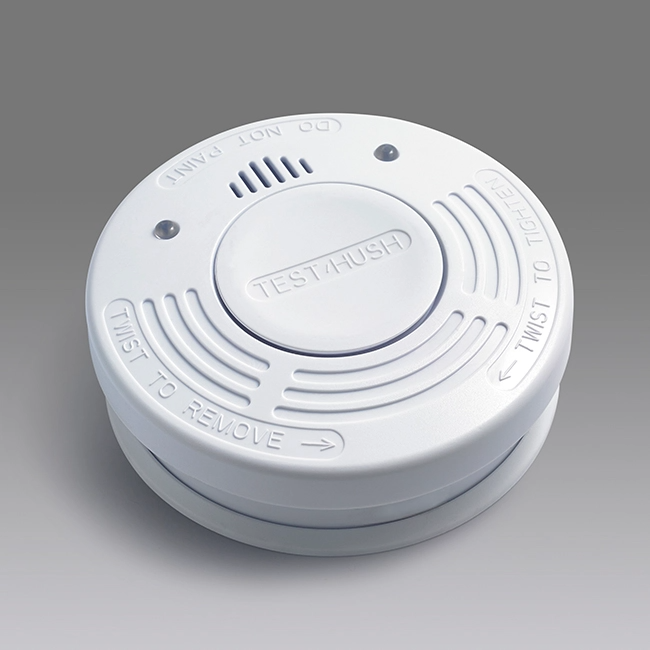
Fire safety is a critical pillar of both residential and commercial property management. As building codes become increasingly stringent, the reliability of life-safety devices like Smoke Alarms remains a top priority for B2B stakeholders, facility managers, and homeowners alike. While many people remember to change the batteries in their devices annually, there is a widespread misunderstanding regarding the lifespan of the unit itself. A smoke detector is not a "set it and forget it" appliance; it is a precision electronic instrument that operates in a harsh environment of dust, humidity, and temperature fluctuations.
Smoke Alarms should be replaced after 10 years because the internal electronic sensors, particularly the ionization chambers or photoelectric cells, degrade over time and become less sensitive to smoke particles, significantly increasing the risk of failure during a real fire emergency.
The 10-year rule for Smoke Alarms is not a marketing tactic used by manufacturers to drive sales, but a data-driven safety standard backed by fire protection associations globally. After a decade of continuous operation, the probability of a device malfunctioning or failing to sound an alert increases exponentially. For businesses managing large facilities, maintaining a strict replacement schedule for Smoke Alarms is essential for liability protection and occupational safety compliance. This article will explore the current recommendations for Smoke Alarms, the technical reasons behind sensor degradation, and the best practices for testing and maintaining these life-saving devices to ensure they are always ready to perform.
Current Recommendations
Why Replace Alarms?
Testing Smoke Alarms
Conclusion
The current global recommendation from fire safety authorities is that all Smoke Alarms, whether battery-operated or hard-wired, must be completely replaced every 10 years from the date of manufacture to ensure optimal sensor performance and reliability.
Modern fire safety guidelines issued in 2026 emphasize that the age of Smoke Alarms is the most significant factor in their failure rates. National fire protection agencies suggest that users should look for the manufacture date printed on the back of the device. If the date is more than 10 years old, the Smoke Alarms are considered "expired" and should be replaced immediately, regardless of whether they pass a basic battery test. For B2B property managers, keeping a digital log of the installation dates for all Smoke Alarms across a portfolio is a standard operating procedure for mitigating risk.
In addition to the 10-year replacement rule, recommendations suggest a "whole-home" or "whole-facility" approach to Smoke Alarms. This involves installing interconnected Smoke Alarms on every level of a building, inside every bedroom, and outside every sleeping area. In a commercial setting, this means ensuring that Smoke Alarms are integrated into the central fire panel but are still replaced on a 10-year cycle. By following these recommendations, you ensure that the earliest possible warning is provided, giving occupants the critical seconds needed to evacuate safely.
Furthermore, current standards promote the use of dual-sensor Smoke Alarms or 10-year sealed battery units. These newer Smoke Alarms are designed to reduce the maintenance burden on the user. However, even these long-life Smoke Alarms are subject to the same 10-year expiration rule. The internal chemistry of the sensors does not change based on the battery type. Whether your Smoke Alarms are high-tech smart devices or basic ionization units, the 10-year clock starts the moment the device leaves the factory floor.
You must replace Smoke Alarms because the sensors lose sensitivity due to environmental contamination, the electronic components suffer from "component drift" over time, and the internal circuitry can become brittle and prone to failure after 87,600 hours of continuous operation.
The primary reason for replacing Smoke Alarms is sensor degradation. Photoelectric Smoke Alarms use a light source and a sensor; over 10 years, the light source can dim and the lens can become clouded by airborne pollutants. Ionization Smoke Alarms use a tiny amount of radioactive material to detect smoke; while the material itself lasts longer, the delicate electrodes that detect the ion flow can corrode or become covered in dust. This means that even if your Smoke Alarms "beep" when you press the test button, the part of the device that actually "smells" the smoke may be non-functional.
Environmental factors in homes and businesses accelerate the aging of Smoke Alarms. Cooking vapors, humidity from bathrooms, and even microscopic dust mites can build up inside the sensing chamber. This accumulation can cause a "false positive," where the Smoke Alarms go off for no reason, or a "false negative," where the smoke is blocked from reaching the sensor. In B2B environments like warehouses or manufacturing plants, the concentration of particulates is often higher, making the 10-year replacement of Smoke Alarms the absolute maximum limit for safety.
Finally, we must consider the reliability of the internal circuitry. Smoke Alarms are "Active" devices that are always monitoring. Like any electronic circuit, capacitors can dry out and solder joints can weaken due to thermal expansion and contraction over a decade. The loud siren in Smoke Alarms also requires a significant burst of power; an aging circuit may not be able to provide the necessary current to sound the alarm at the required decibel level. Replacing your Smoke Alarms ensures that you are utilizing the latest in sensor technology and reliable electronic components.
| Factor | Impact on Smoke Alarms | Prevention/Action |
| Dust Accumulation | Causes false alarms or sensor blockage | Vacuum Smoke Alarms monthly |
| Humidity | Corrodes internal metal contacts | Replace unit if in high-moisture area |
| Chemical Vapors | Can desensitize the sensor chemistry | Keep Smoke Alarms away from paint/cleaners |
| Component Aging | Reduces the loudness of the alarm siren | Replace Smoke Alarms every 10 years |
| Insects | Can nest inside the sensing chamber | Use Smoke Alarms with insect screens |
Testing Smoke Alarms should be performed at least once a month by pressing the test button to verify the circuitry and siren, and once a year with a specialized smoke-simulating aerosol to ensure the sensor is actually capable of detecting particles.
Regular testing of Smoke Alarms is the only way to verify that the device is receiving power and that the audible alert is functioning. To test your Smoke Alarms, simply press and hold the test button until the loud siren sounds. This checks the battery, the electronic board, and the horn. For B2B facilities, a monthly test of all Smoke Alarms should be documented in a fire safety logbook to meet insurance and regulatory requirements. If the siren is weak or non-existent, the Smoke Alarms must be serviced or replaced immediately.
However, the "button test" only verifies the electronics, not the sensor's ability to "see" smoke. To truly test Smoke Alarms, professionals use an "entry test" with a canned aerosol smoke. By spraying a small amount of this stimulant near the Smoke Alarms, you can confirm that the ionization or photoelectric chamber is still clear and sensitive. If the Smoke Alarms do not react to the aerosol but pass the button test, the sensor is likely contaminated or degraded, and the unit must be replaced.
Maintenance is also a key part of the testing cycle. While you are testing your Smoke Alarms, it is recommended to use a vacuum cleaner with a soft brush attachment to clear any dust or cobwebs from the exterior vents. This keeps the path to the sensor clear. Never use water or cleaning solvents on Smoke Alarms, as these can damage the delicate sensors. If your Smoke Alarms start chirping intermittently, it is usually a signal of a low battery or a "fault" condition. Do not ignore these signals; they are designed to prevent the Smoke Alarms from failing when they are needed most.
Monthly: Press the test button on all Smoke Alarms to check the siren and battery.
Monthly: Vacuum the outside of the Smoke Alarms to remove dust and debris.
Bi-Annually: Replace 9V batteries (unless you have 10-year sealed Smoke Alarms).
Annually: Perform an aerosol "real smoke" test to verify sensor sensitivity.
10-Year Mark: Remove and replace all Smoke Alarms with new units.
Post-Renovation: Always test Smoke Alarms after any construction work that creates dust.
The 10-year lifespan of Smoke Alarms is a critical threshold that defines the boundary between safety and risk. As we have explored, the electronic and chemical components within Smoke Alarms are subject to unavoidable degradation over time. Whether through dust accumulation, sensor desensitization, or electronic component drift, an old alarm is a dangerous alarm. By adhering to the 10-year replacement rule, B2B managers and homeowners can ensure they are protected by the most reliable technology available.
As platforms like Safelincs and First Alert suggest, the cost of replacing Smoke Alarms is negligible compared to the potential loss of life and property. In 2026, with the availability of 10-year sealed battery units and smart interconnected Smoke Alarms, maintaining a modern fire safety system is easier than ever. However, technology cannot overcome the laws of physics and chemistry; sensors will always have an expiration date.
In conclusion, your Smoke Alarms are the only things standing between you and a late-night disaster. Treat them with the respect they deserve by testing them monthly and replacing them every decade. Don't wait for a "chirp" or a failure to take action. Check the manufacture date on your Smoke Alarms today and make the commitment to keep your environment safe, compliant, and prepared.