Views: 0 Author: Site Editor Publish Time: 2026-02-16 Origin: Site


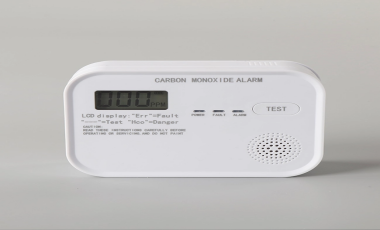
Carbon monoxide (CO) is an insidious threat, characterized by its lack of color, odor, or taste, which allows it to accumulate to lethal concentrations without being detected by human biology. For B2B stakeholders, property managers, and safety officers, the deployment of a high-performance Carbon Monoxide Alarm is the primary method for safeguarding personnel and assets. This gas is a byproduct of incomplete combustion, commonly emanating from faulty boilers, generators, industrial furnaces, or blocked ventilation systems.
Carbon monoxide levels are measured in parts per million (PPM), and while outdoor background levels are typically below 0.5 PPM, indoor concentrations become dangerous above 35 PPM for long-term exposure and life-threatening once they exceed 400 PPM, necessitating the use of a Carbon Monoxide Alarm to provide time-weighted alerts before physiological damage occurs.
Navigating the complexities of gas concentration requires more than just installing a device; it requires an understanding of how a carbon monoxide alarm beeping correlates to specific environmental risks. Because CO bonds with hemoglobin 200 times more effectively than oxygen, even low-level exposure over a prolonged period can lead to chronic health issues. This comprehensive guide details the mechanics of detection, the thresholds of danger, and the specific alarm response protocols. By understanding these levels, facilities can move from a reactive safety posture to a proactive one, ensuring that a Carbon Monoxide Alarm serves as a reliable guardian against the "silent killer."
How Carbon Monoxide Detectors Work
How Much Carbon Monoxide Is Dangerous?
When Will Carbon Monoxide Levels Set Off Your Alarm?
Carbon Monoxide Levels and Their Symptoms
Additional Information
Conclusion
A Carbon Monoxide Alarm works by utilizing an electrochemical sensor where CO gas enters a chamber and triggers a chemical reaction that produces an electrical current, the strength of which is proportional to the gas concentration, eventually triggering the carbon monoxide alarm beeping once safety limits are breached.
The core of a modern Carbon Monoxide Alarm is the electrochemical cell. This sensor consists of two or three electrodes immersed in an electrolyte solution. When carbon monoxide molecules penetrate the sensor housing, they are oxidized at the working electrode, creating a flow of electrons. This current is measured by the Carbon Monoxide Alarm's microprocessor. For B2B managers, it is vital to understand that this is an "active" process; the sensor is constantly monitoring the air chemistry, which is why the carbon monoxide alarm beeping occurs so reliably when thresholds are met.
Unlike smoke detectors, which use light or ionization, the Carbon Monoxide Alarm is designed for high specificity. This means it is less likely to be triggered by steam or dust, which is common in manufacturing plants or commercial kitchens. However, the chemical nature of the sensor means it has a finite lifespan. Over 7 to 10 years, the electrolyte can dry out, or the electrodes can become "poisoned" by other chemical vapors. This is why a carbon monoxide alarm beeping in a specific pattern (often two chirps) signifies the end-of-life for the unit, rather than an emergency.
Advanced Carbon Monoxide Alarm units also feature digital signal processing (DSP). This allows the Carbon Monoxide Alarm to filter out temporary spikes in CO levels, such as those caused by a car starting in a nearby garage, while still identifying sustained, dangerous accumulations. This intelligence prevents "nuisance alarms" while ensuring that if a true leak occurs, the carbon monoxide alarm beeping will sound with 100% accuracy. Understanding this mechanical foundation helps B2B buyers choose the right Carbon Monoxide Alarm for their specific environmental needs.
Carbon monoxide becomes dangerous to human health starting at 35 PPM for continuous exposure over 8 hours, while concentrations of 400 PPM are life-threatening within 2 hours, and levels reaching 1,600 PPM can cause death in less than an hour, making a Carbon Monoxide Alarm critical for early warning.
The danger of CO is expressed as a function of concentration and time. A low level of 50 PPM might not seem significant, but if a worker is exposed to it for an entire shift without a Carbon Monoxide Alarm, they can suffer from significant carboxyhemoglobin buildup. In professional safety management, we categorize these risks into "low," "mid," and "high" levels. A Carbon Monoxide Alarm is calibrated to act as a buffer, sounding the carbon monoxide alarm beeping well before the "high" danger zone is reached.
In many commercial buildings, CO levels are typically 0 to 5 PPM. Once levels reach 70 PPM, a Carbon Monoxide Alarm must sound an alert within 60 to 240 minutes. If the concentration jumps to 400 PPM, the carbon monoxide alarm beeping must sound within 4 to 15 minutes. This tiered approach is based on the fact that the body can handle very small amounts of CO for short periods, but high concentrations are rapidly fatal. Without a Carbon Monoxide Alarm, there is no biological way for a human to know they are entering a lethal environment until it is too late to escape.
To help B2B stakeholders visualize these risks, safety officers often use a CO concentration chart. This data helps in determining where to place a Carbon Monoxide Alarm—for instance, near potential sources like loading docks or boiler rooms. If these areas frequently see levels above 35 PPM, the carbon monoxide alarm beeping might trigger, indicating a need for improved ventilation systems rather than just an emergency evacuation.
| CO Level (PPM) | Exposure Duration | Potential Health Impact | Carbon Monoxide Alarm Response |
| 9 PPM | 8 Hours | Maximum indoor air quality level | No alarm (Safe) |
| 35 PPM | 8 Hours | OSHA workplace limit | No alarm (Monitoring) |
| 70 PPM | 1 to 4 Hours | Headache, fatigue, nausea | carbon monoxide alarm beeping |
| 150 PPM | 10 to 50 Minutes | Dizziness, disorientation | carbon monoxide alarm beeping |
| 400 PPM | 1 to 2 Hours | Life-threatening; brain damage | Immediate Alarm |
| 800 PPM | 45 Minutes | Unconsciousness; death | Immediate Alarm |
| 1,600 PPM | 20 Minutes | Death within 1 hour | Immediate Alarm |
A Carbon Monoxide Alarm will set off its emergency siren based on a time-weighted average, typically triggering at 70 PPM for 60 to 240 minutes, 150 PPM for 10 to 50 minutes, or 400 PPM for 4 to 15 minutes to provide a safety margin for occupants.
The sensitivity of a Carbon Monoxide Alarm is governed by international safety standards such as UL 2034. These standards are designed to prevent "nuisance" carbon monoxide alarm beeping from very brief, low-level spikes that pose no health threat, while ensuring a rapid response to high-level leaks. For a facility manager, knowing when a Carbon Monoxide Alarm will sound is essential for emergency planning. If a carbon monoxide alarm beeping occurs, it means the CO levels have been high enough for long enough to jeopardize safety.
When the Carbon Monoxide Alarm detects a sustained level of 70 PPM, it enters a state of alarm. This is because at 70 PPM, the CO in the air begins to significantly displace oxygen in the blood of children, the elderly, or those with heart conditions. If the levels are much higher, say 400 PPM, the Carbon Monoxide Alarm reacts much faster. The logic is simple: the more gas there is, the less time you have to get out. The carbon monoxide alarm beeping is the signal that the "time-weighted" safety threshold has been crossed.
It is a common misconception that a Carbon Monoxide Alarm will go off the second it detects 1 PPM. If alarms were that sensitive, they would be beeping constantly due to city traffic or smoking. Instead, the Carbon Monoxide Alarm integrates the concentration over time. This makes the Carbon Monoxide Alarm a smarter device than a standard smoke detector, as it understands the physiological impact of the gas it is measuring. If you hear the carbon monoxide alarm beeping, the situation is already critical.
Symptoms of carbon monoxide exposure range from mild headaches and fatigue at 35-70 PPM to severe dizziness, confusion, and unconsciousness at 400 PPM+, often characterized by a lack of fever which helps distinguish it from the flu.
The danger of CO levels is directly reflected in the symptoms experienced by occupants. At low levels, which might not yet trigger a Carbon Monoxide Alarm, people often report a "dull" headache and general tiredness. As the concentration rises toward the carbon monoxide alarm beeping threshold, symptoms become more acute: nausea, vomiting, and blurred vision. In an industrial B2B setting, these symptoms can be particularly dangerous as they lead to impaired judgment and physical coordination, increasing the risk of workplace accidents.
When CO levels exceed 400 PPM, the symptoms escalate to what is known as "acute poisoning." This includes a rapid heart rate, chest pain, and extreme confusion. If a Carbon Monoxide Alarm is not present to provide a warning, the individual may become too disoriented to realize they need to leave the building. At extremely high levels (above 1,000 PPM), a single breath can cause immediate collapse. The carbon monoxide alarm beeping is designed to sound while the occupants are still conscious and capable of self-evacuation.
Crucially, CO poisoning symptoms are often collective. If multiple employees or family members experience the same "flu-like" symptoms simultaneously, it is a massive red flag for a gas leak. In such cases, even if the Carbon Monoxide Alarm hasn't sounded yet, the building should be evacuated. A digital Carbon Monoxide Alarm can confirm these suspicions by showing the exact PPM reading, allowing for a faster medical response.
Low Levels (10-35 PPM): Usually no immediate symptoms; potentially harmful for long-term exposure in those with heart disease.
Mid Levels (35-100 PPM): Mild headache, fatigue, shortness of breath during exertion. Carbon Monoxide Alarm will likely sound at the upper end of this range.
High Levels (100-400 PPM): Severe headache, nausea, dizziness, confusion, and impaired motor skills. carbon monoxide alarm beeping is persistent.
Critical Levels (400+ PPM): Fainting, seizures, heart failure, and death. The Carbon Monoxide Alarm siren is a final life-saving warning.
Beyond emergency alerts, a Carbon Monoxide Alarm provides critical data for facility maintenance, as recurring low-level readings on a digital display can pinpoint leaking equipment before it reaches hazardous levels.
In the B2B world, the Carbon Monoxide Alarm is as much a diagnostic tool as it is a safety device. For example, if a warehouse manager notices their Carbon Monoxide Alarm is showing a consistent 20 PPM during peak hours, it suggests that the ventilation system is inadequate for the number of forklifts in operation. This allows for an engineering fix before the carbon monoxide alarm beeping ever starts. Using a Carbon Monoxide Alarm in this way minimizes operational downtime and ensures a healthier work environment.
Maintenance of the Carbon Monoxide Alarm itself is also paramount. You should test your Carbon Monoxide Alarm monthly using the test button, which checks the internal circuitry and the siren. Furthermore, ensure the Carbon Monoxide Alarm is placed at the correct height; since CO is slightly lighter than air, it tends to diffuse evenly, so a Carbon Monoxide Alarm should be placed at eye level or higher, and never on the floor. If you hear a single carbon monoxide alarm beeping chirp every minute, it is simply a signal to change the battery, which should be done immediately to maintain protection.
Finally, consider the benefits of interconnected Carbon Monoxide Alarm units. In large facilities, if one Carbon Monoxide Alarm in the boiler room detects a leak, all units in the building will start beeping. This ensures that the carbon monoxide alarm beeping is heard by everyone, regardless of their distance from the source. Modern Carbon Monoxide Alarm technology now integrates with building management systems (BMS), providing real-time CO level data to a central dashboard for maximum oversight.
Understanding carbon monoxide levels is the difference between a safe workplace and a potential tragedy. The Carbon Monoxide Alarm is a highly engineered safety device that translates invisible chemical concentrations into life-saving acoustic signals. From the moment the electrochemical sensor detects the first few parts per million to the moment a full carbon monoxide alarm beeping sequence sounds, every aspect of the device is designed with a margin of safety for human life.
As we have discussed, the danger of CO is a factor of both PPM and time. By utilizing a Carbon Monoxide Alarm as both an emergency alert and a diagnostic monitor, B2B stakeholders can ensure they are meeting the highest standards of safety in 2026. Whether you are monitoring for the 35 PPM OSHA limit or the life-critical 400 PPM threshold, your Carbon Monoxide Alarm remains your most reliable witness to the "silent killer."
In conclusion, the goal of safety management is to ensure that a carbon monoxide alarm beeping is an event that leads to a safe evacuation, not a medical emergency. Regular testing, proper placement, and an educated response to PPM levels will ensure your facility remains secure. Respect the levels, trust your Carbon Monoxide Alarm, and always act immediately when the siren sounds.