Views: 0 Author: Site Editor Publish Time: 2026-03-02 Origin: Site


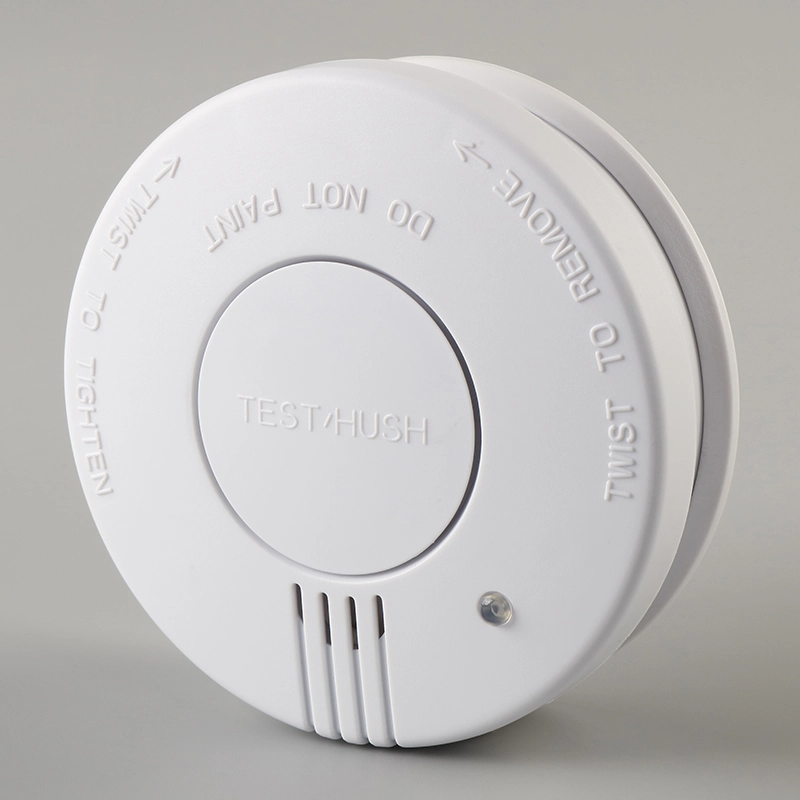
In the realm of fire safety and property management, the reliability of life safety systems is non-negotiable. Whether you are managing a commercial facility, an industrial complex, or a residential portfolio, the functionality of your fire detection network serves as the primary line of defense against catastrophic loss. Proper maintenance ensures that these sensitive electronic devices remain operational and free from environmental interference that could lead to false alarms or, more critically, failure during an actual fire event.
To maintain your smoke detector effectively, you must perform monthly functional testing, clean the sensing chamber every six months to remove dust, replace batteries annually (or as indicated by low-battery chirps), and replace the entire unit every ten years. Compliance with NFPA 72 standards is essential for professional environments to ensure all smoke alarm detector and heat alarm systems are integrated and functioning within their calibrated sensitivity ranges.
Understanding the nuances of Inspection, Testing, and Maintenance (ITM) can be the difference between a minor incident and a total loss. This comprehensive guide explores the technical requirements, the legal responsibilities of maintenance, and the specific actions required to keep your detection hardware in peak condition according to industry standards.
Smoke Alarm vs. Smoke Detector
Who Can Perform Smoke Detector ITM?
What Needs to Be Done?
Advanced Troubleshooting and Best Practices
A smoke alarm is a self-contained device that includes both the smoke sensor and an audible notification appliance in one unit, whereas a smoke detector is a sensing component that sends a signal to a centralized fire alarm control panel.
While the terms are often used interchangeably in casual conversation, the technical distinction is vital for maintenance protocols. A smoke alarm detector is typically found in residential settings or smaller commercial "stand-alone" applications. These units detect smoke and sound a local siren immediately. Because they are independent, maintenance is usually localized to the device itself, involving battery checks and manual button testing.
In contrast, a smoke detector is part of a complex integrated system. These are common in high-rise buildings, hospitals, and large industrial sites. When a smoke detector identifies a fire signature, it doesn't always make a sound itself; instead, it alerts a control panel which then triggers building-wide notification appliances, closes fire doors, and notifies emergency services. Maintaining a smoke detector requires specialized knowledge of the entire system loop and the control panel interface.
Furthermore, it is important to distinguish these from a heat alarm. While a smoke detector identifies particles of combustion, a heat alarm responds to specific temperature thresholds or rapid rises in temperature. Heat alarms are frequently used in environments where smoke or steam would cause nuisance alarms, such as kitchens or mechanical rooms. Both require distinct testing methods—smoke detectors require canned smoke or aerosols, while heat alarms require controlled heat sources.
| Feature | Smoke Alarm | Smoke Detector | Heat Alarm |
| Power Source | Battery or Plug-in | System-powered (Loop) | Battery or System |
| Notification | Internal Siren | Central Panel / External Horns | Internal or External |
| Best Use Case | Residences / Small Offices | Large Commercial / Industrial | Kitchens / Garages |
| Primary Trigger | Ionization/Photoelectric particles | Ionization/Photoelectric particles | Temperature ($^\circ$C/$^\circ$F) |
The qualifications required to perform Inspection, Testing, and Maintenance (ITM) depend on the building type and local regulations, ranging from homeowners for residential alarms to certified fire alarm technicians for commercial smoke detector systems.
For residential properties, the occupant or homeowner is generally responsible for basic monthly testing and battery replacement. This is a straightforward process that does not require specialized tools beyond a ladder and perhaps a vacuum attachment. However, even in residential settings, the complexity increases if the home uses interconnected smoke alarm detector units that communicate wirelessly or via hardwiring.
In commercial, industrial, or multi-family residential buildings, maintenance must be performed by "qualified personnel." According to NFPA 72, this usually means individuals who are factory-trained and certified, or those certified by organizations such as NICET (National Institute for Certification in Engineering Technologies). These professionals possess the equipment to measure the sensitivity of a smoke detector to ensure it hasn't become too sensitive (causing false alarms) or too sluggish (failing to detect smoke).
Property managers must maintain records of who performed the maintenance and when. In many jurisdictions, fire marshals require annual inspection reports signed by a licensed fire safety contractor. Attempting to maintain a complex commercial smoke detector system without proper certification can void insurance policies and lead to significant legal liability if the system fails during an emergency.
Residential (Single Family): Homeowner or Tenant.
Commercial (Small Office): Facility Manager or Third-party Contractor.
Industrial/High-Rise: Licensed Fire Life Safety Technician.
Hospitality/Healthcare: Certified On-site Engineering Team or Specialized Vendors.
Maintenance of a smoke detector involves a three-tier approach: visual inspection to ensure no physical damage or obstructions, functional testing using simulated smoke, and physical cleaning to prevent sensor drift.
The first step in any maintenance routine is the visual inspection. You must ensure that the smoke alarm detector is not covered in paint, dust, or cobwebs. There should be a minimum of 21 inches of clear space around the detector to allow for proper airflow. If a smoke detector is located near a vent or a ceiling fan, its ability to "catch" smoke particles may be compromised, which must be addressed during the inspection phase.
Functional testing is the next critical pillar. For a standard smoke alarm detector, pressing the "test" button checks the battery and the siren, but it does not necessarily test the sensor's ability to detect smoke. To truly maintain the system, professionals use UL-listed canned smoke to simulate a fire event. This ensures that the photoelectric or ionization chamber is actually processing the air correctly. For a heat alarm, a specialized heat tester is used to ensure the thermistor triggers at the rated temperature.
Cleaning is the most overlooked aspect of maintenance. Over time, dust and small insects can enter the sensing chamber, leading to "sensitivity drift." This can cause the smoke detector to trigger without reason or fail to trigger at all. Using compressed air or a vacuum cleaner at a safe distance can remove these contaminants. If the device is a system-connected smoke detector, the control panel may need to be put into "test mode" before cleaning to prevent accidental dispatch of the fire department.
Monthly: Press the test button to confirm power and sounder functionality.
Quarterly: Visually inspect for obstructions, damage, or leaking batteries.
Semi-Annually: Vacuum or blow out dust from the exterior and interior vents.
Annually: Replace 9V or AA batteries (if applicable) and perform a functional smoke entry test.
Decennially: Replace the entire unit. Sensors degrade over time and are generally rated for a 10-year lifespan.
When a smoke detector begins to chirp or trigger false alarms despite regular cleaning, it often indicates a power issue, an expired sensor, or environmental interference that requires advanced troubleshooting.
One of the most common issues in smoke detector maintenance is the "nuisance alarm." If a smoke alarm detector is frequently triggered by steam from a shower or burnt toast, it is often a sign of improper placement rather than a faulty device. However, if the device is clean and correctly placed, persistent false alarms may indicate that the sensor has become "over-sensitive" due to internal component degradation. In such cases, the only solution is replacement.
For hardwired systems, maintenance must also include checking the wiring connections. Corroded wires or loose wire nuts can cause intermittent power loss, leading the smoke detector to chirp as if the battery is low, even if the battery is brand new. In large-scale installations, using a multimeter to check the voltage at the furthest device on the loop ensures that the entire system has adequate power to function during a full-scale alarm event where all notification appliances are drawing current.
Finally, always keep a logbook. Whether it is a digital spreadsheet or a physical binder, documenting every smoke detector test, battery change, and cleaning session is essential for B2B operations. This documentation serves as proof of diligence for insurance providers and fire inspectors. If a fire occurs and you cannot prove the smoke alarm detector was maintained, you may face significant hurdles in insurance claims or legal defense.
Use the Right Battery: Only use the battery brands recommended by the manufacturer. Some smoke detector units are calibrated for the specific voltage discharge curves of certain alkaline brands.
Mark the Date: Use a permanent marker to write the installation date on the inside of the detector cover so you know exactly when the 10-year replacement window expires.
Coordinate with the Monitoring Center: If your smoke detector is monitored, always call the monitoring station before starting maintenance to avoid false dispatches.
Consider Interconnectivity: When replacing old units, upgrade to interconnected models so that if one smoke alarm detector sounds, they all sound, providing maximum escape time.
By adhering to these rigorous maintenance standards, you ensure that your fire safety infrastructure remains a silent, reliable guardian of your property and personnel.