Views: 0 Author: Site Editor Publish Time: 2026-03-05 Origin: Site


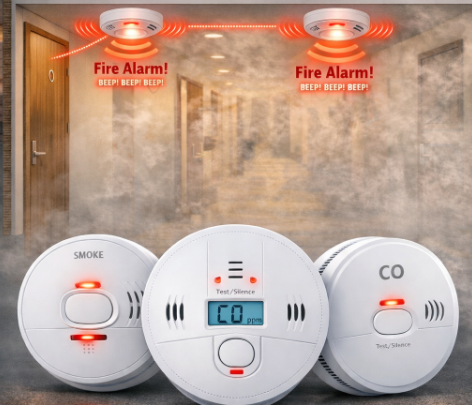
Residential fire safety remains one of the most critical concerns for homeowners and property managers worldwide. Statistics from fire protection associations consistently show that a functional smoke alarm detector significantly increases the survival rate during a home fire by providing the early warning necessary for a safe evacuation. As technology evolves, integrating a reliable smoke alarm detector system is no longer just a recommendation but a fundamental requirement for modern building codes and family safety protocols.
The essential smoke alarm safety tips involve installing devices on every level of the home, prioritizing strategic placement near sleeping areas, performing monthly testing and maintenance, choosing specialized models like a wireless smoke alarm or a smoke alarm with battery backup, and establishing a practiced emergency evacuation plan.
Understanding the nuances of fire detection technology can be the difference between a minor incident and a catastrophe. This comprehensive guide explores the professional standards for selecting, installing, and maintaining your smoke alarm detector infrastructure. By following these industry-backed strategies, you can ensure that your property is equipped with the most effective early warning systems available today.
Install Smoke Alarms to Help Protect Your Home and Family
Placement of Smoke Alarms is Important
Maintain Your Smoke Alarms to Help Ensure They Are Functioning Properly
Choose the Right Smoke Alarm for Your Needs
Have a Plan Prepared if the Smoke Alarms Sounds
To maximize safety, you must install a smoke alarm detector on every level of your home, including the basement, and ensure that every bedroom and common hallway is covered by a functioning unit.
The primary goal of a smoke alarm detector is to buy time. Fires can spread with incredible speed, often leaving occupants with less than two minutes to escape safely once the alarm sounds. By installing a smoke alarm detector in every high-risk area, you create a comprehensive safety net that monitors for smoke particles 24 hours a day. Modern fire safety standards emphasize that "one is not enough"; a multi-device approach is the only way to guarantee that a fire in the kitchen will be detected quickly enough to alert someone sleeping in a distant upstairs bedroom.
When considering the installation process, it is important to understand the different types of sensor technologies available in a smoke alarm detector. Ionization sensors are generally more responsive to flaming fires, while photoelectric sensors are faster at detecting smoldering fires. Professionals often recommend a "dual-sensor" approach or installing a mix of both types throughout the property. This ensures that regardless of how a fire starts—whether from a forgotten candle or a short-circuiting appliance—your smoke alarm detector network will respond immediately.
Beyond individual units, the industry has shifted toward interconnected systems. In an interconnected setup, when one smoke alarm detector senses smoke, every alarm in the house sounds simultaneously. This is particularly vital for large homes where a wireless smoke alarm in the garage might not be audible from a master suite. Using a wireless smoke alarm with interconnection capabilities allows for easy retrofitting in older homes without the need for complex rewiring, providing a sophisticated level of protection that was previously only available in high-end commercial buildings.
The strategic placement of a smoke alarm detector is crucial for its effectiveness, requiring units to be mounted high on walls or on ceilings because smoke naturally rises toward the highest points of a room.
Proper placement of a smoke alarm detector prevents "dead air" pockets where smoke might not reach the sensor in time. For ceiling mounts, the smoke alarm detector should be placed at least 4 inches away from the nearest wall. If you are mounting a smoke alarm detector on a wall, it should be positioned between 4 and 12 inches from the ceiling. These specific measurements are designed to ensure the smoke alarm detector is in the direct path of rising smoke and heat, providing the fastest possible response time during a fire event.
Avoid placing a smoke alarm detector near windows, doors, or ducts where drafts might interfere with its operation. A draft can blow smoke away from the smoke alarm detector, delaying the alarm. Furthermore, while it is important to have a smoke alarm detector near the kitchen to catch cooking-related fires, placing one too close to the stove can lead to frequent nuisance alarms. Most experts suggest keeping the smoke alarm detector at least 10 feet away from cooking appliances to minimize false triggers while maintaining safety.
In multi-story dwellings, the placement of a smoke alarm detector on the ceiling of a stairway is essential, as stairways act like chimneys, drawing smoke upward. For those using a smoke alarm with battery power, accessibility for maintenance should also be considered, though safety placement must always take priority over convenience. Below is a quick reference table for optimal placement:
| Room Type | Recommended Location | Notes |
| Bedroom | Inside each sleeping room | Essential for waking sleeping occupants |
| Hallways | Outside every sleeping area | Covers the path to the exit |
| Kitchen | 10 feet away from appliances | Reduces false alarms from steam |
| Living Area | Central ceiling location | Monitors common fire sources |
| Basement | On the ceiling near the stairs | Detects fire before it moves upstairs |
Regular maintenance of your smoke alarm detector involves monthly testing using the test button, cleaning the unit of dust, and replacing batteries at least once a year if you are using a smoke alarm with battery power.
A smoke alarm detector is a life-saving device that is often forgotten until it is needed. However, sensors can become clogged with dust or insects, and batteries can fail without warning. Testing your smoke alarm detector once a month is the simplest way to verify that the internal circuitry and the siren are operational. Simply press and hold the "test" button until the loud siren sounds. If the sound is weak or nonexistent, it is time to check the power source or replace the smoke alarm detector entirely.
For users who rely on a smoke alarm with battery backup or primary power, the "Change Your Clock, Change Your Battery" rule is a helpful reminder. Every six months, or at least once a year, replace the old batteries with fresh, high-quality alkaline batteries. If your smoke alarm detector begins to chirp intermittently, this is usually a "low battery" warning. Do not disable the smoke alarm detector to stop the noise; replace the battery immediately. Many modern units now come with 10-year sealed lithium batteries, which eliminate the need for annual changes but still require monthly testing.
Cleaning is an often overlooked aspect of smoke alarm detector maintenance. Use a vacuum cleaner with a soft brush attachment to gently remove dust from around the vents of the smoke alarm detector. This prevents false alarms and ensures that smoke can easily reach the sensor. Remember that every smoke alarm detector has an expiration date, typically 10 years from the date of manufacture. Check the back of your smoke alarm detector for the date; if it is over a decade old, its sensors may have degraded, and the unit must be replaced with a new smoke alarm detector to maintain reliable protection.
Selecting the right smoke alarm detector involves deciding between ionization, photoelectric, or dual-sensor technologies and choosing between hardwired, battery-powered, or a wireless smoke alarm system based on your home's infrastructure.
The market offers various configurations of the smoke alarm detector to suit different environmental needs. A smoke alarm with battery power is the easiest to install, requiring no wiring and functioning even during a power outage. However, for the highest level of reliability, many professionals recommend hardwired systems that include a smoke alarm with battery backup. This setup ensures the smoke alarm detector has a constant power supply from the home’s electrical system while remaining functional if the electricity goes out.
If you live in a larger home or a multi-unit property, a wireless smoke alarm system is often the best choice. A wireless smoke alarm uses radio frequency signals to link multiple units together. If a smoke alarm detector in the basement senses a problem, it sends a signal to every other wireless smoke alarm in the house, ensuring everyone is alerted regardless of their location. This interconnected technology is a significant upgrade over standalone units, as it eliminates the risk of not hearing an alarm in a distant part of the building.
When purchasing a smoke alarm detector, look for reputable certifications such as UL (Underwriters Laboratories). You should also consider the specific hazards in your home. For example, if you have gas appliances or a fireplace, a combination smoke alarm detector and carbon monoxide detector is a space-saving and highly effective option. Comparing the different types of power sources can help you make an informed decision:
| Feature | Smoke Alarm with Battery | Hardwired Smoke Alarm | Wireless Smoke Alarm |
| Installation | Easy, DIY friendly | Requires professional | Easy, allows interconnection |
| Power Source | Replaceable or Sealed Battery | Home electricity + Battery | Battery or Hardwired |
| Interconnection | Not typically available | Physical wires required | Radio frequency signals |
| Best For | Older homes, sheds, rentals | New construction, renovations | Large homes, multi-story |
When your smoke alarm detector sounds, you must have a pre-arranged and practiced fire escape plan that includes two ways out of every room and a designated meeting place outside.
The sound of a smoke alarm detector can be startling and disorienting, especially in the middle of the night. A well-prepared plan ensures that every member of the household knows exactly what to do without hesitation. Your plan should identify all possible exits, including windows and doors. If a primary exit is blocked by smoke or flames, everyone should know the secondary route. Practicing this "fire drill" at least twice a year helps turn these actions into muscle memory, which is vital when a smoke alarm detector alerts you to a real emergency.
In addition to knowing the exits, it is important to teach everyone to "get low and go." Since smoke and toxic gases from a fire rise, the air is cleaner and cooler near the floor. If the smoke alarm detector goes off and there is smoke in the air, crawling to the exit is the safest method. Once outside, everyone should go to a pre-determined meeting place, such as a specific tree, a neighbor's porch, or a mailbox. This allows for a quick head-count to ensure everyone is safe and prevents rescuers from entering a burning building to look for someone who is already out.
Finally, never ignore a smoke alarm detector signal, even if you suspect it is a false alarm. Treat every activation as a real emergency. Once you have evacuated and reached your meeting place, call the fire department from a mobile phone or a neighbor's house. Do not go back inside for pets, toys, or valuables. A smoke alarm detector provides the warning, but your preparation and quick action are what ultimately save lives. Ensure your smoke alarm detector is part of a broader safety culture in your home.
Maintaining a smoke alarm detector system is an ongoing responsibility that requires attention to detail and a proactive mindset. By ensuring you have a smoke alarm detector on every floor, placing them correctly to catch rising smoke, and performing regular maintenance, you create a robust defense against fire. Whether you choose a smoke alarm with battery for its simplicity or a wireless smoke alarm for its interconnected coverage, the presence of a working smoke alarm detector is the most important factor. Always remember that technology works best when combined with a solid escape plan and a commitment to fire safety education.